Dashpivot Actions

Scaling a construction task management system to 4.5x adoption
BACKGROUND
What is Dashpivot?
Dashpivot is Sitemate's core product - a B2B SaaS platform that helps construction and infrastructure companies  digitise and streamline their processes and paperwork. '

It replaces paper forms and spreadsheets with a single cloud-based system.
Actions
Actions is a task management system, letting users assign and track tasks in the field and office.

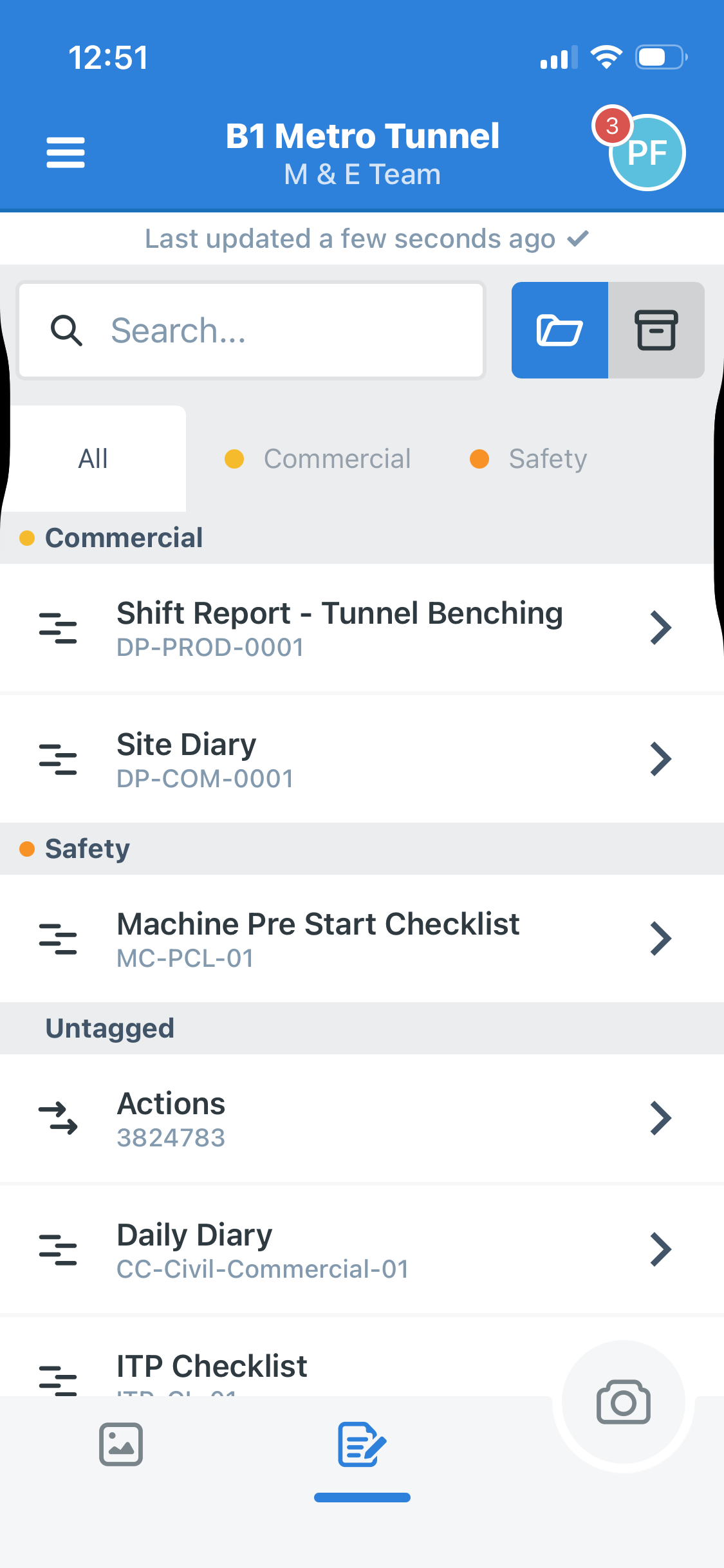

An early MVP existed but it wasn't integrated with Dashpivot's forms. Construction teams create tasks mid-inspection, not from a standalone list. Without that integration, adoption sat at <100 tasks created per month.
Example of a form in Dashpivot
PROBLEM
Tasks fell through the cracks.
Work sites generate many daily tasks from inspections, incidents, audits, and meetings that require urgent action.

Without a built-in system, supervisors had to manually email or text people after completing forms, making tasks hard to track and easy to miss.

Compliance requirements like ISO 45001 couldn't be met in Dashpivot.
“Currently Dashpivot doesn't notify whoever has the action item. You finish your form and then you have to email people separately what to complete and what to do." 
- Site Supervisor

"We have a meeting once a week and I kind of yell out on why they're not getting stuff done... you get overwhelmed, there's so much going on, you do lose track of things." 
- Operations Manager
My Role
Role
Product Designer (Web), Product Owner

Timeline
Mar 2025 – Nov 2025 (8 months)

Team
3 web engineers, 2 mobile engineers, 2 Group PMs, CEO

Responsibilities
User research, data analysis, ux and interaction design, roadmap planning, PRD, Jira ticket scoping, cross-platform coordination (web and mobile), QA, release planning, post-launch analysis.

Scope
Took design and product ownership of the feature in my second week and helped deliver 8 major releases across web and mobile.
SOLUTION
A form field to integrate task management within forms.
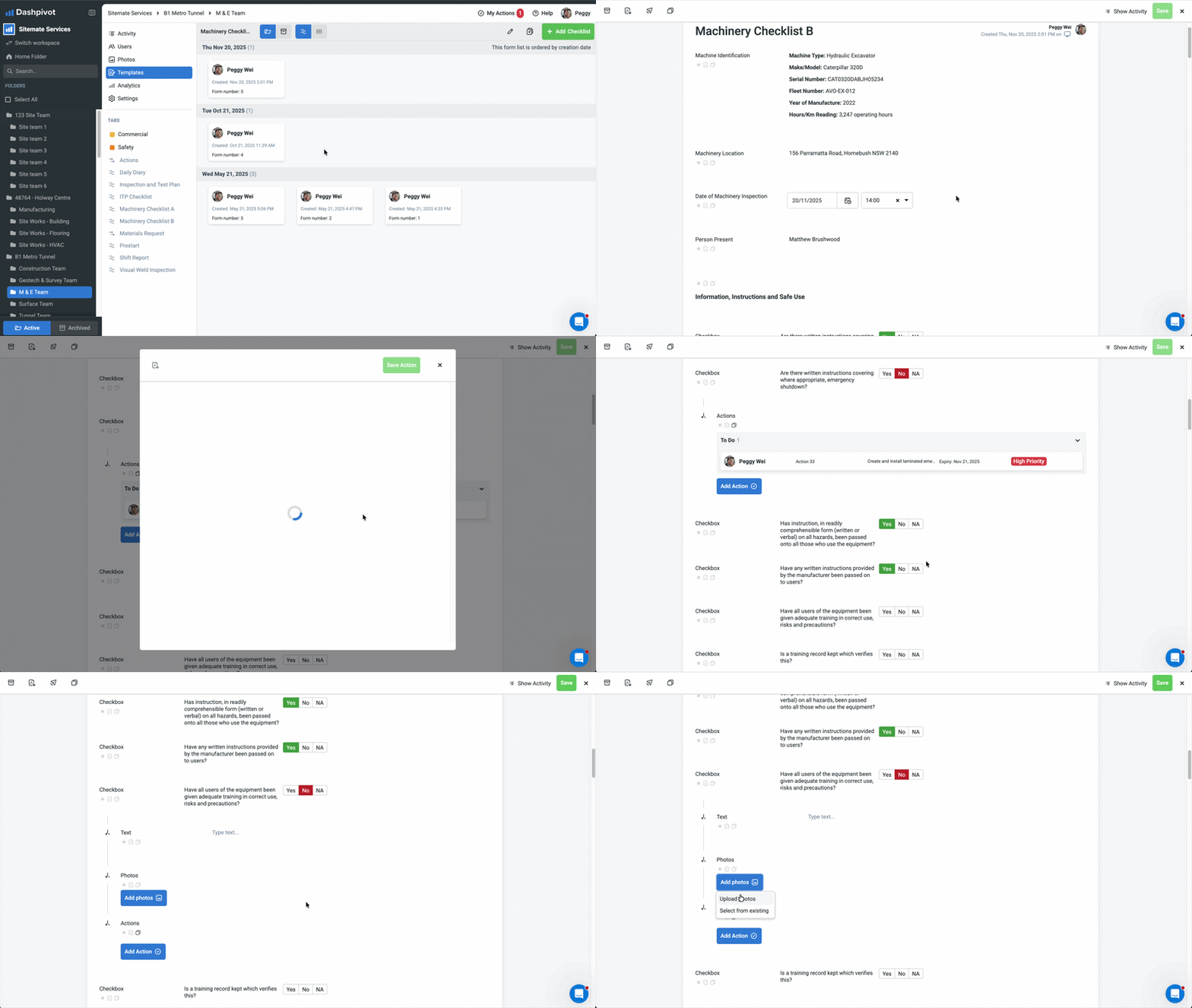
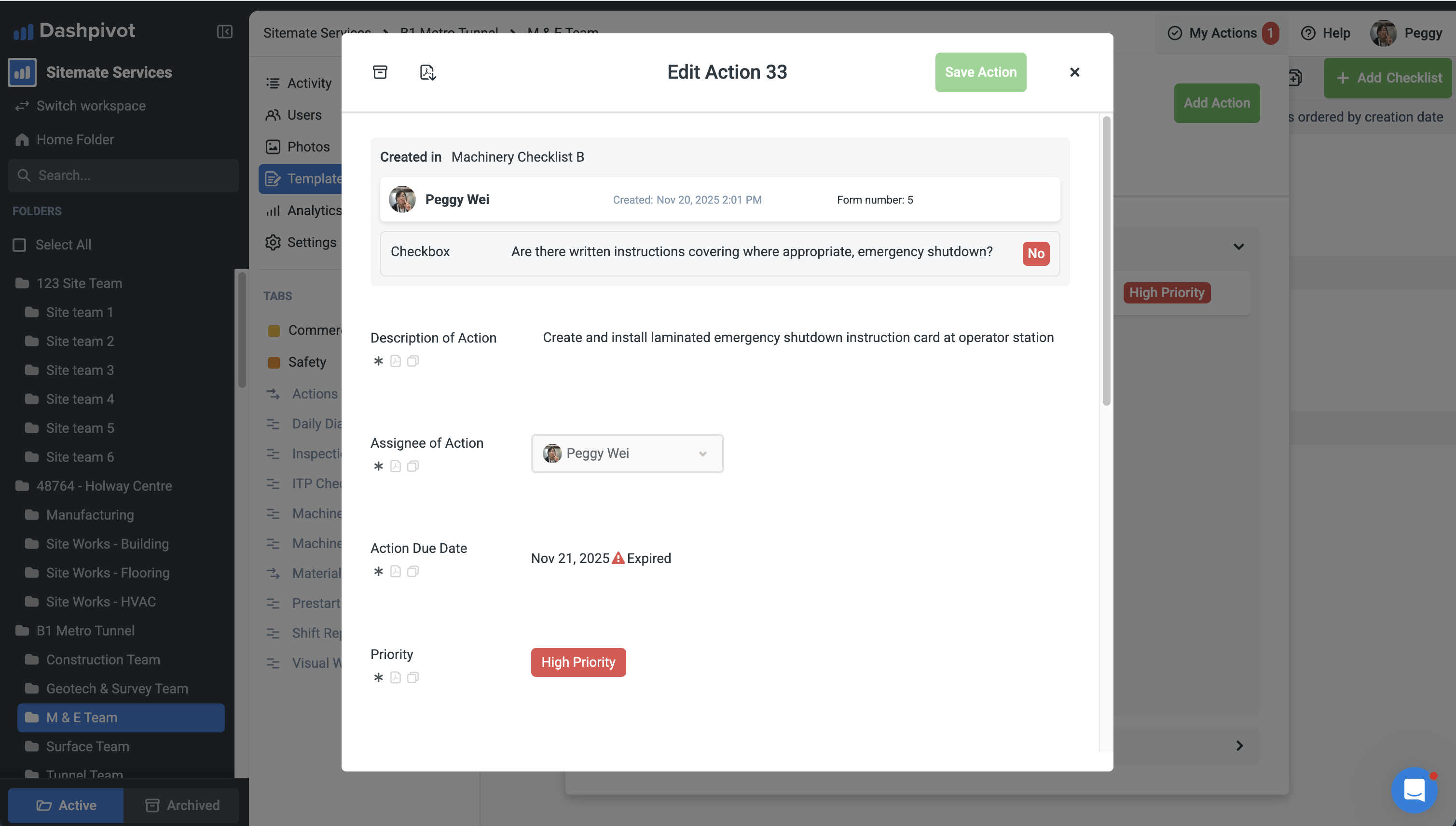
Users could create tasks directly within forms while completing inspections, such as flagging “fix this railing” during a safety check. Each task was automatically linked back to the original form for traceability.
Phased delivery
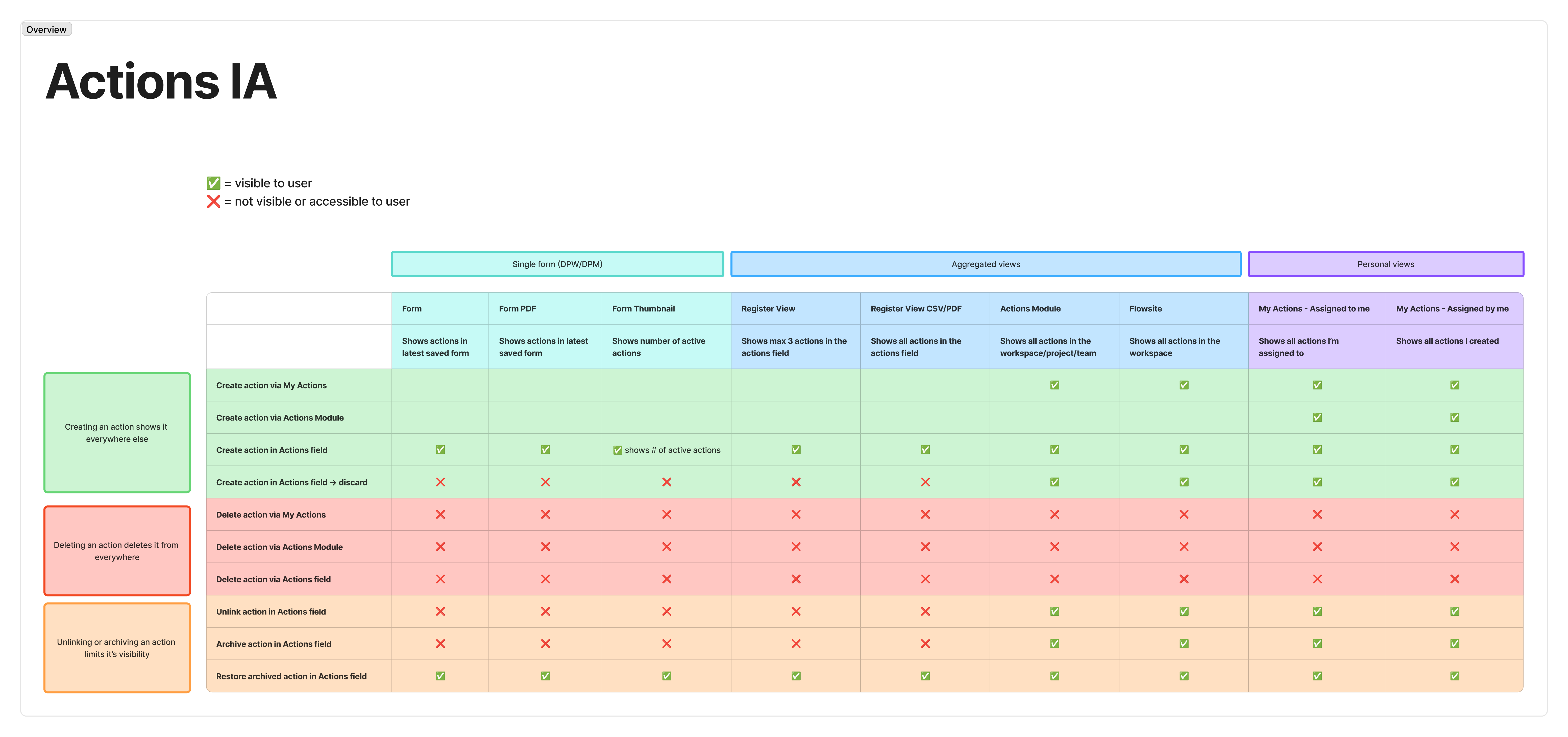
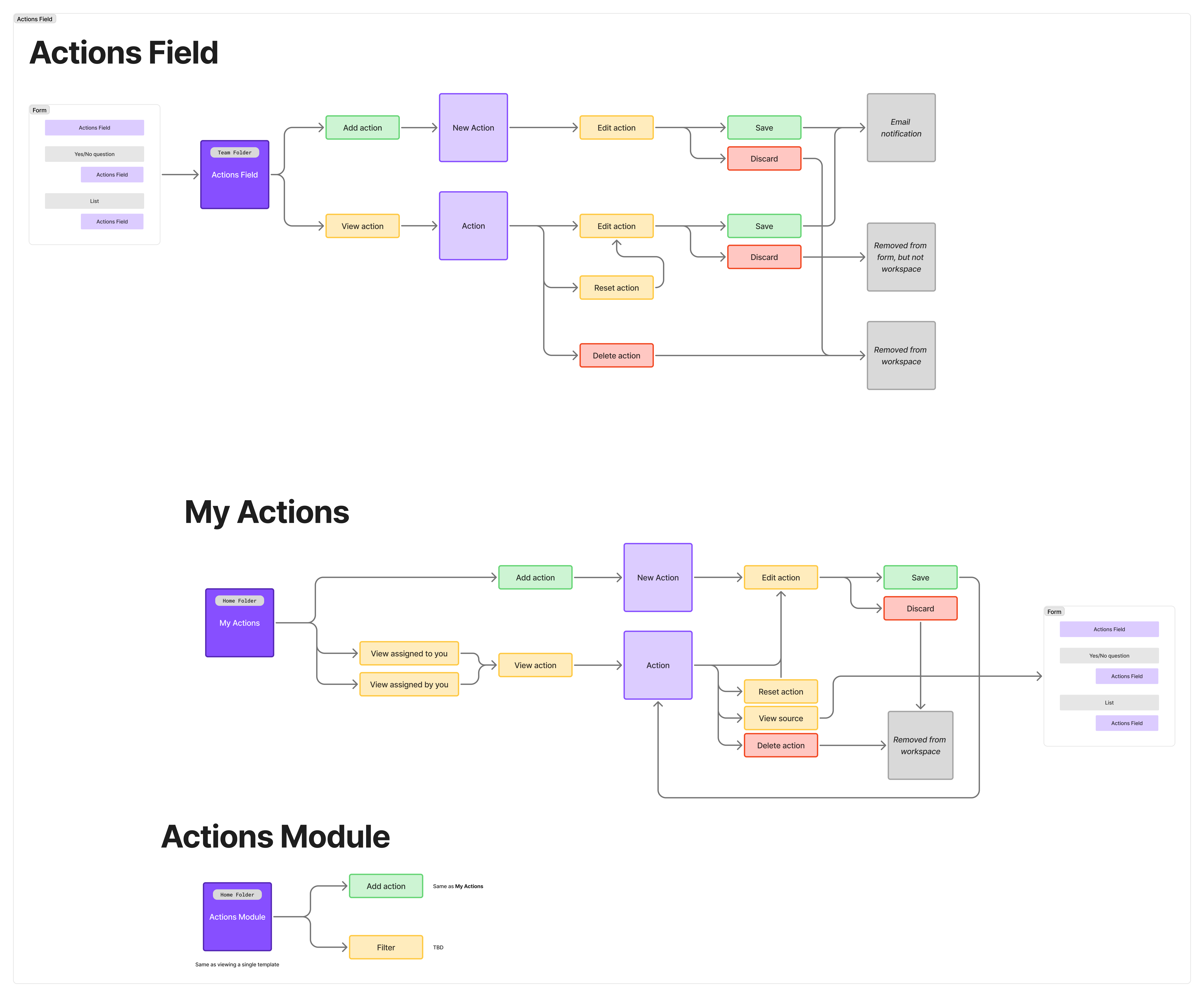
The biggest challenge was scoping what to ship and when. We phased releases that gradually unlocked new value while managing technical constraints.
  • Forms integration meant workers could create tasks mid-inspection, linked back to the source form. It works for checklists too. Actions can be triggered for specific checklist items instead of at the end of a form.
  • Cross-platform parity across web and mobile ensured our two personas - office-based safety and quality managers and on-site field workers - were both served.
  • Notifications were sent via email, using our existing infrastructure
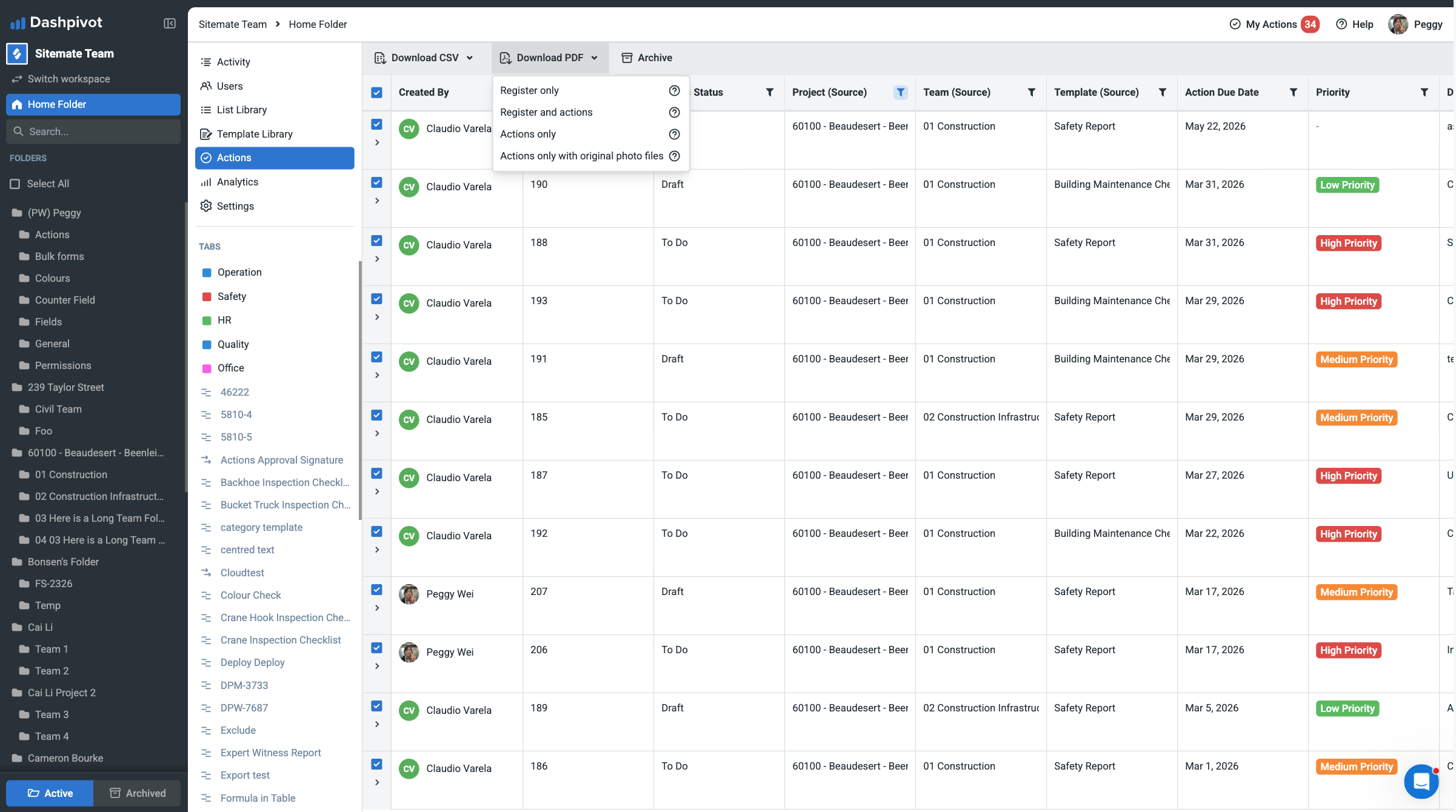
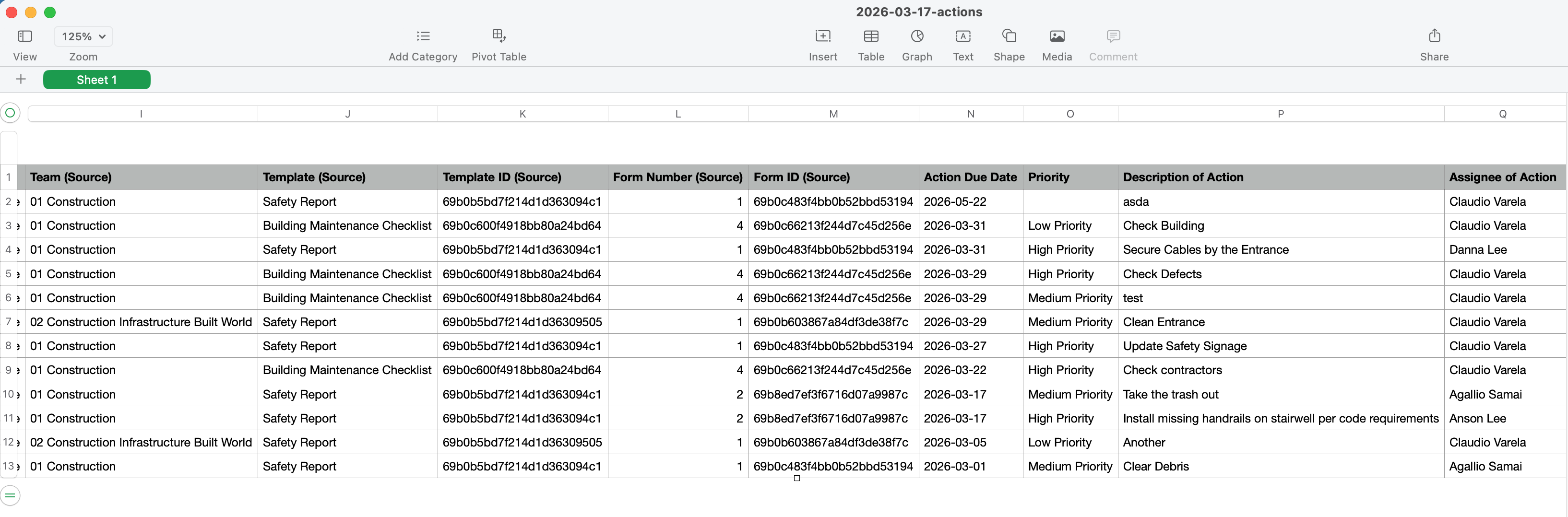
  • Exports to PDF and CSV gave supervisors an audit trail and made it easy to share work with contractors and clients. The CSV provided additional metadata enabling analytics.
  • Sign-off could be blocked if tasks weren't completed, helping supervisors manage site work.
Example action linked to the original form and checklist item
Register of all Actions in a workspace
CSV export for reporting
PROCESS
Beyond Product Design
UX Research
In my second week, I saw a gap in how user research was being shared. I synthesised 8 customer interviews into a structured research summary format, that was adopted by other teams.

I initially conducted 5x user interviews but shifted to analysing data and feedback from CS, Sales, NPS, and our native apps. Using Claude to summarise this feedback helped us move faster.
PRD & Roadmap
Documentation was scattered and much of the knowledge lived in our co-founders’ heads. I created a PRD template covering context, vision, research, and a phased roadmap. 10 months later, the team has now created 80 PRDs.

Customer feedback and usage data showed Actions was not meeting customer needs, so I recommended we prioritise Actions improvements before starting another critical feature. This earned me CEO approval to shape strategy and the roadmap.
Kudos from leadership
REFLECTION
The line between product designers and product managers is blurring.
Becoming a better designer
This project pushed me beyond design into product strategy and delivery. Users needed a usable feature beyond the MVP, so success required more than good design - it meant influencing the roadmap, articulating the vision, and taking product ownership. I believe these skills have made me a stronger product designer and operator.
What I'd do differently
Earlier mobile alignment. While the PRD helped, web and mobile still had some rocky moments. Starting design reviews and technical discussions earlier would've caught inconsistencies and edge cases sooner.

Less phases, larger releases. NPS feedback indicated some user confusion and frustration because "the platform keeps changing". Now with AI reducing shipping time, combatting feature fatigue by building the right thing is more important than ever.